Biography
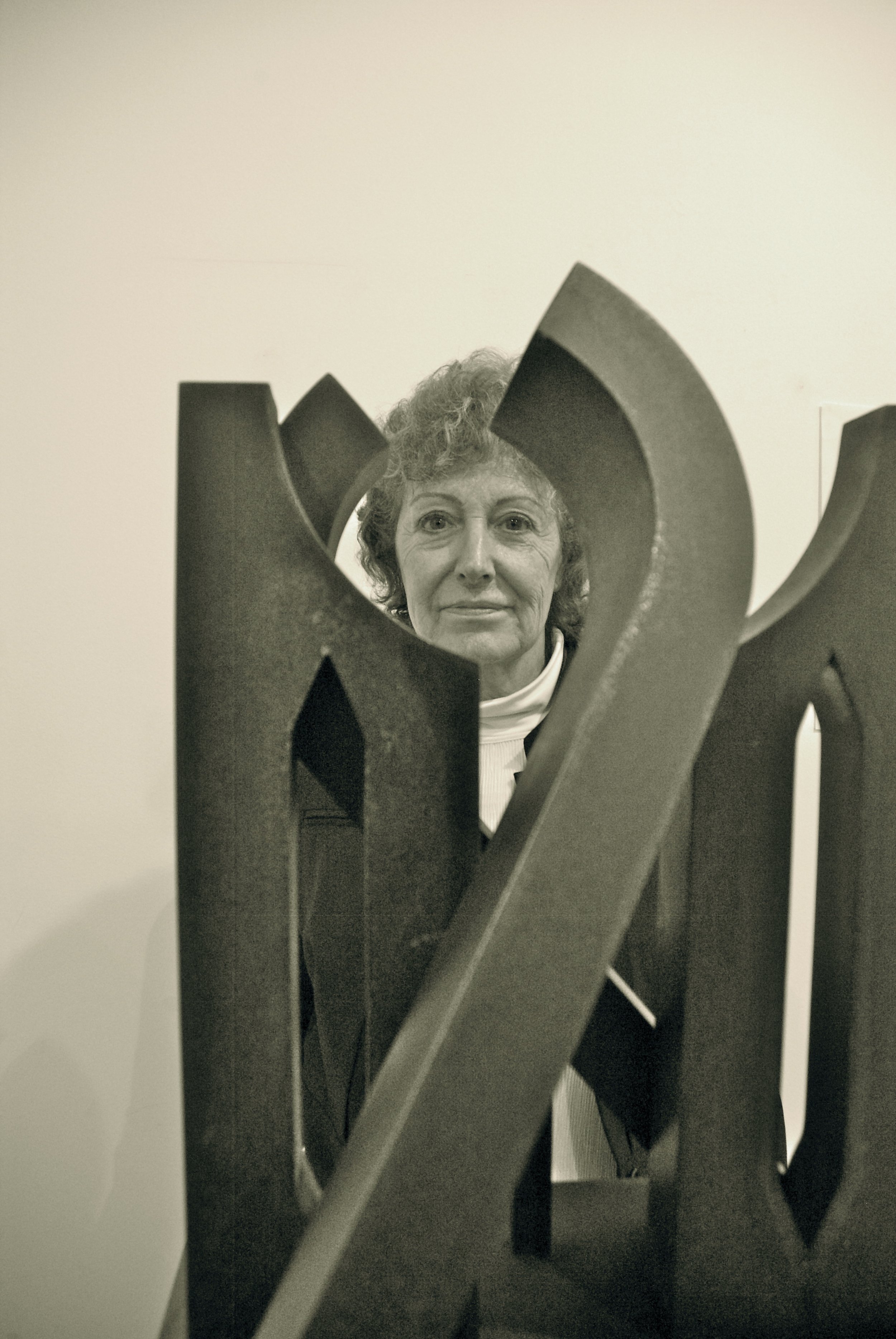
Elisa Arimany was born in Sant Vicenç de Castellet on a given March 7 of the 20th century. She was the daughter of Salvador Arimany, a constructor and self-made man who instilled in her a fierce personal discipline and the will to work and show her worth. After studying in Manresa and helping at the family construction business for some years, she married Ramon Sugrañes and in 1958 they moved to Cerdanyola del Vallès, where he would set up the tile company Ceràmica Sugrañes. In the laboratory of the family factory, the sculptor began to experiment with ceramics and glazing. In the Seventies, she designed a series of glazed tiles and delved into public muralism (especially in Cerdanyola: she decorated the Cerdanyola City Hall, Sant Ramon square...), while also creating small decorative and commercial ceramic sculptures, such as dolls, bowls, pitchers, etc. In the Eighties she started to leave craftwork behind in order to focus on artistic sculpture. The series Terra i paper (“Earth and paper”) was presented in 1986 at the Nomen Gallery in Barcelona, a decisive step: apart from presenting herself as an artist to collectors and gallery owners, she showcased the mix of materials that would characterize her oeuvre for the first time. From then on, iron, paper, stone and ceramics would combine freely in her works as a fundamental part of her message, which tended to reflect the contradictions of her time. The Nineties saw the start of her international expansion: in 1993 she erected a large format sculpture (La força d’una idea, “The strength of an idea”) in New York’s Socrates Park; in 1996, her work Games (“Ranges”) was financed for Atlanta’s Capitol Avenue, on the occasion of the Olympic Games hosted in that city. Furthermore, she exhibited in many galleries in Miami, a city she visited often and in which she had a study. While all this was taking place, Arimany’s works traveled through exhibitions all over Europe, without ever leaving her home cities behind: in 1998, she inaugurated El cant de la terra (“The song of the earth”) in Sant Vicenç; in 2002, the sculpture Europa, perhaps her most relevant work, in the Technology Park of El Vallès. She became involved in social reflection with Migracions (“Migrations”) in 2004, unwittingly taking on a subject that would soon rock the foundations of Europe. In 2005, a trip to Dublin inspired her to create the series Catedrals (“Cathedrals”), which evokes the simple and overwhelming strength of the gothic constructions. Ever loyal to her idea of art as an entity that has to be abstract, freely interpreted and universally accessible, she tended increasingly towards the simplicity of the straight line and unadulterated materials. Her broad artistic creation (which as well as sculpture also included poetries and paintings) didn’t end until late 2014.
Anna Pazos Sugrañes